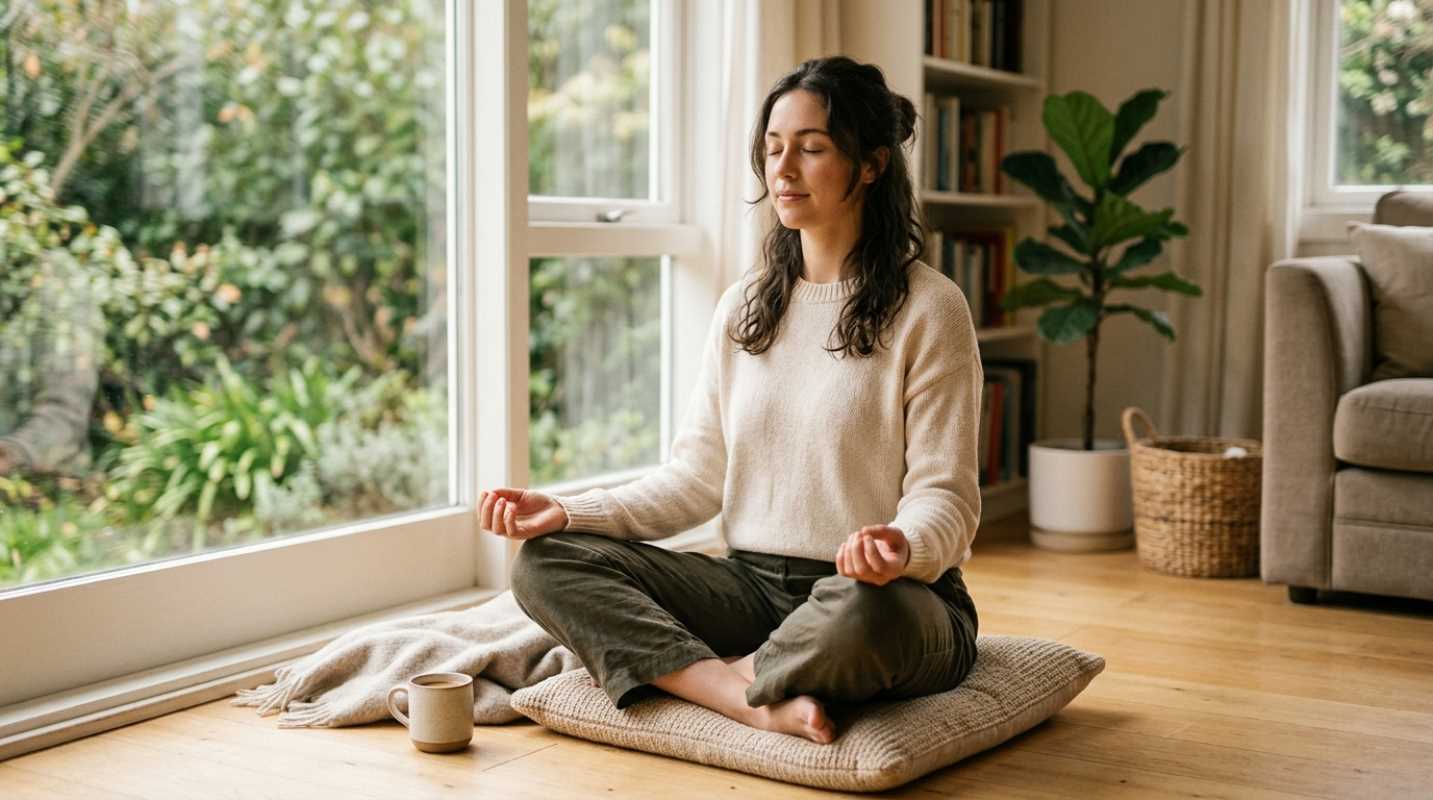
Have you ever caught your mind racing at three in the morning over a casual comment your boss made? Or maybe you have felt that sudden tight knot in your chest while standing in a busy grocery store line.
If so, you are far from alone. More than 301 million people across the globe live with anxiety disorders, including over 40 million adults in the United States. Everyday stress has become a background noise for modern life.
The good news is that managing this mental noise does not require moving to a quiet monastery or spending hours in silence. Awareness is not a spiritual chore or an all-or-nothing philosophy. It is simply a practical mental toolkit. It gives you a way to pause, reset your nervous system, and take control of your emotional space when life feels a lot of.
The Foundation Beginner Awareness Practices for Anxiety
One of the biggest myths about meditation is that you must completely clear your mind. People often try it once, realize they cannot stop thinking, and quit because they think they failed.
Awareness is not about stopping your thoughts. It is about changing how you respond to them. When a worried thought pops up, you simply notice it without judgment and let it pass by. You do not need a blank slate in your head to find calm.
When anxiety hits quickly, you need tools that work right away. Here are two accessible practices you can use anywhere
• The 5-4-3-2-1 Grounding Technique: This exercise forces your brain out of abstract worry and brings it back to the physical room around you. Look around and silently name five things you can see, four things you can physically feel, three distinct sounds you hear, two things you can smell, and one thing you can taste.
• Breath Awareness Anchoring: Your breath is a portable steering wheel for your nervous system. Try the 4-7-8 method to slow a racing heart. Inhale quietly through your nose for four seconds, hold that breath for seven seconds, and exhale completely through your mouth for eight seconds. Repeat this four times.
• Brief Body Scans: Close your eyes for two minutes and move your attention from your forehead down to your toes. Notice where you are holding stress, such as a clenched jaw or tight shoulders, and consciously allow those muscles to soften.
Harnessing Guided Meditation Techniques
If you are dealing with spiraling thoughts, sitting alone with your breath can feel intimidating. An anxious mind loves to fill quiet spaces with worst-case scenarios.
This is where guided meditation makes a massive difference. Having a calm teacher speaking directly to you interrupts your inner negative commentary. The voice gives your brain an external anchor to follow, making it much easier to stay grounded.
Using modern apps and guided audio tracks lets you practice without having to invent the routine yourself.
Guided tracks take the guesswork out of the process. Whether you spend five minutes listening to an ambient audio track on your lunch break or follow a teacher through a structured evening routine, guided tools keep you on track.
Incorporating Awareness into a Daily Routine
You do not need to sit on a cushion for an hour every day to see real progress. In fact, practice data shows that standard practitioners prefer quick sessions lasting between 10 and 20 minutes.¹ More than half of regular meditators practice daily, proving that small moments add up over time.¹
The easiest way to build a habit is through micro-awareness and habit stacking. Instead of adding a brand new block of time to your busy calendar, attach a quick practice to something you already do every single day.
• The Commute Pause: Before turning key in your car ignition or stepping onto public transit, take three slow, deliberate breaths. Notice your hands on the wheel or your feet on the floor.
• Aware Dishwashing: Turn a routine chore into a grounding exercise. Focus entirely on the warmth of the water, the scent of the soap, and the feeling of the plates in your hands.
• Morning Stack: Pair three minutes of simple breath focus directly with your morning coffee or tea. Sit quietly while the beverage brews, using the rising steam as your focus point.
• Evening Unwind: Right after you turn off your bedroom light, spend two minutes doing a quick body scan to release the physical tension built up during the workday.
Overcoming Common Roadblocks
Starting a new practice sounds simple on paper, but real life gets messy. Knowing how to handle predictable hurdles will keep you from dropping out early.
The most common complaint is feeling like you do not have enough time. If you have time to scroll through social media on your phone for five minutes, you have time to meditate. Frame awareness as a mental rest break rather than a daily chore.
Another frequent obstacle is feeling restless. You sit down, close your eyes, and suddenly your legs feel twitchy, or your mind starts creating a long to-do list. That restlessness is not a sign of failure. It is just your body releasing built-up nervous energy.
When intense emotional surges happen, try the RAIN framework
• Recognize: Acknowledge what you are feeling by mentally saying, "Anxiety is here right now."
• Allow: Let the feeling exist for a moment without fighting it or trying to push it away.
• Investigate: Look at the physical sensations with curiosity. Is your chest tight? Is your belly fluttering?
• Nurture: Offer yourself gentle self-compassion. Remind yourself that feeling anxious is temporary and that you are safe in this moment.
Your Path Forward
Building an awareness habit pays off in ways that extend far beyond feeling relaxed for a few minutes. Research from Georgetown University Medical Center shows that standard eight-week awareness programs are as effective at reducing anxiety symptoms as commonly prescribed medications like Lexapro, without the uncomfortable side effects.²
Brain imaging studies confirm that regular practice calms the brain networks responsible for repetitive worrying and worst-case scenario thinking.³ Over time, you literally rewire your brain to handle unexpected stress with greater ease.
You do not need to overhaul your entire lifestyle overnight. You only need to take one small step. Start today by taking three slow, deliberate breaths before you move on to your next task. That brief pause is where your path to emotional calm begins.
Sources:
1. Aware Leader
https://www.awareleader.org/blog/106947-meditation-practice-report
2. Georgetown University Medical Center
https://gumc.georgetown.edu/news-release/awareness-based-stress-reduction-is-as-effective-as-an-antidepressant-drug-for-treating-anxiety-disorders/
3. PsyPost
https://www.psypost.org/scientists-discover-new-insights-into-how-awareness-practices-shift-the-brains-neural-space/
*This article on wellnesschecker is for informational and educational purposes only. Readers are encouraged to consult qualified professionals and verify details with official sources before making decisions. This content does not constitute professional advice.*