 (Image source: Midjourney)
 Between back-to-back video calls, endless notifications, and the general hum of daily life, our brains rarely get a true break. Have you ever walked through your front door after a long day and felt your shoulders stay pinned to your ears? That physical tension is your nervous system begging for a pause. We spend roughly 90 percent of our lives indoors, yet most homes are built for productivity and entertainment rather than genuine recovery. Creating a dedicated wellness corner changes that dynamic entirely.
Here is everything you need to know to carve out, design, and protect your own personal retreat at home.
Why You Need a Dedicated Sanctuary
Home-based self-care is no longer just a luxury trend. Over the past few years, our living spaces took on the role of offices, gyms, and classrooms all at once. When the boundaries between work and rest blur, your baseline stress stays elevated.
According to the National Kitchen and Bath Association (NKBA) Design Trends Report, over 53% of interior designers now see living areas being redesigned specifically to support healthy living and outdoor connections.³ That shift is driven by biology. When you enter a room designed with soft textures, clean air, and warm tones, your brain registers safety. Your heart rate slows, your breathing deepens, and your cortisol levels naturally drop.
Before you buy a single cushion or candle, define what you actually need from the area. Ask yourself a few basic questions:
• Primary Purpose: What will you do here most often? Is it quiet meditation, gentle morning yoga, or simply reading a book without a phone nearby?
• Emotional State: How do you want to feel the second you step into this zone? Grounded, energized, or totally relaxed?
• Daily Timing: Will you use this space at sunrise, during midday breaks, or right before bed?
Clarity here keeps you from buying decorative clutter that gets in the way of your actual routine.
Selecting the Perfect Nook
You do not need an entire spare bedroom or an expansive sunroom to build a restorative spot. A small, underused alcove, an empty attic corner, or even a wide landing at the top of the stairs can work wonders.
Look for a spot that offers two core environmental ingredients.
• Natural Light: Sunlight regulates your natural circadian rhythms. A spot near an east-facing window gives you gentle morning light that naturally wakes up your brain without raising anxiety.
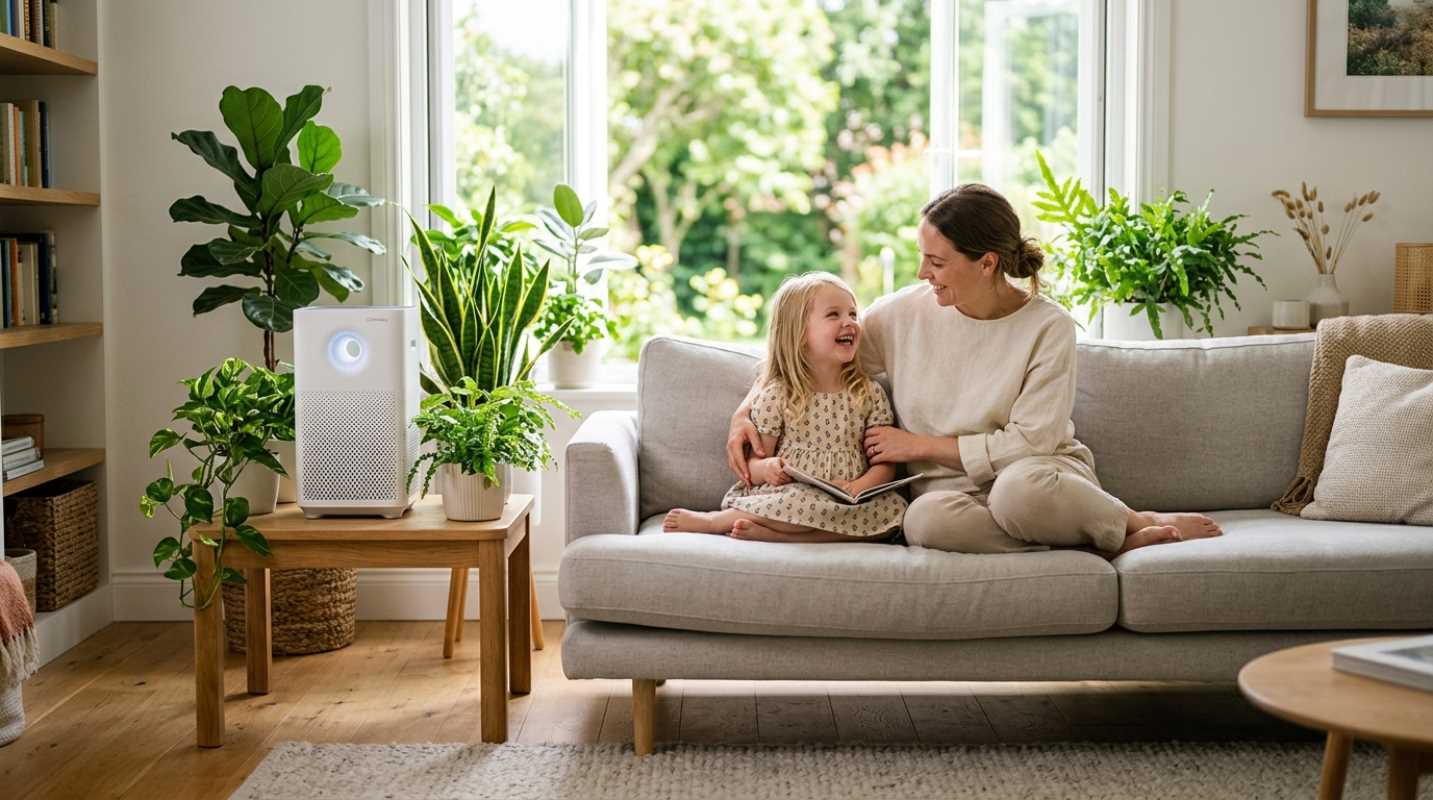
• Air Circulation: Stale air leads to brain fog and fatigue. Pick an area near an operable window or somewhere you can comfortably fit a quiet air purifier.
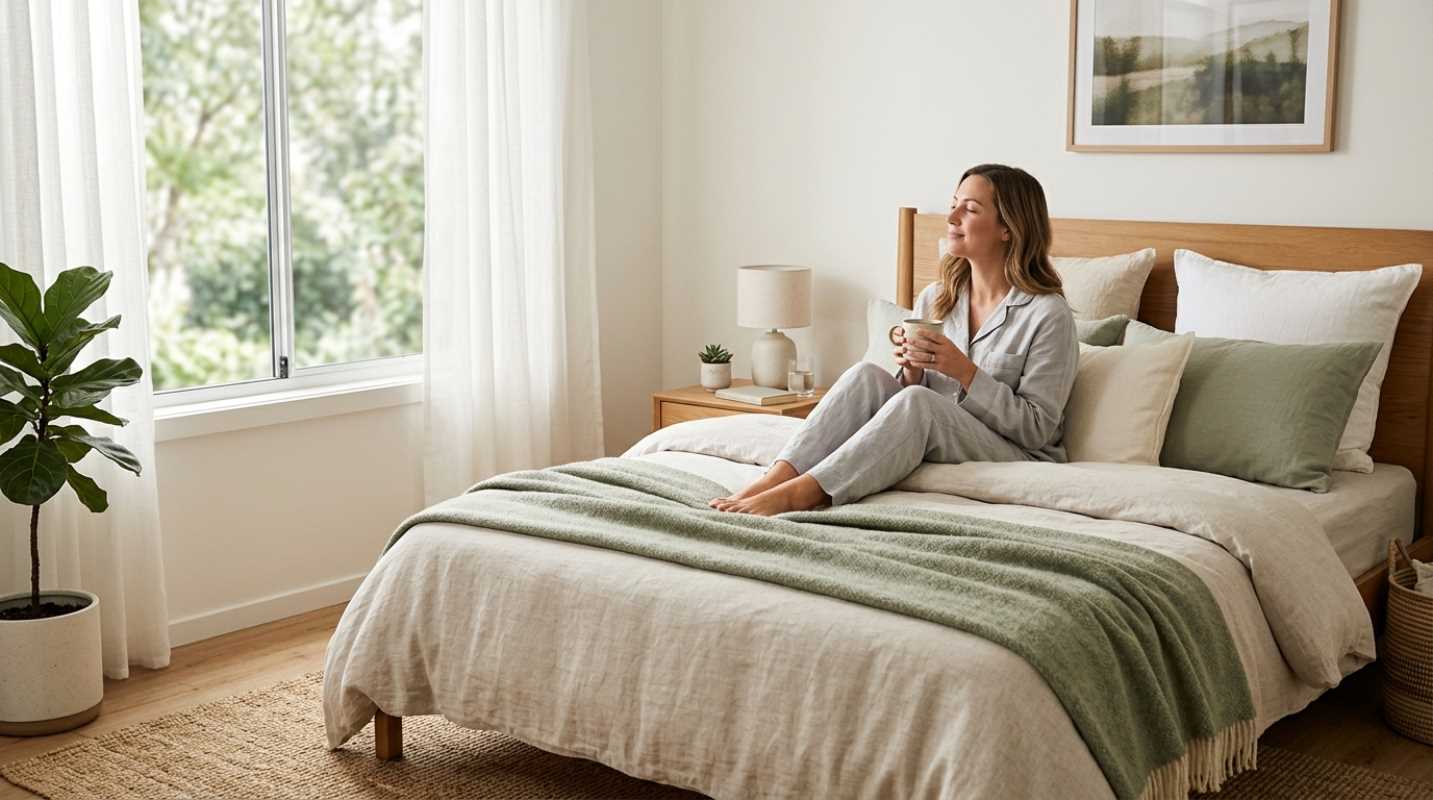
For decorating, skip the sterile look. Crisp white walls and bare surfaces can feel clinical rather than calm. Instead, lean into warm, grounding tones like sage green, soft taupe, or warm terracotta.¹⁰ Choose what brings you mental clarity. If seeing decorative objects makes you feel peaceful, include a few favorites. If visual clutter distracts you, keep surfaces bare and streamlined.
Curating Your Wellness Needs
Creating a calming environment comes down to tuning the input your five senses receive. When you reduce harsh sensory triggers, your nervous system downshifts.
Lighting and Sight
Swap out overhead recessed bulbs for layered, indirect light. Dynamic circadian lighting that shifts from cool white in the morning to warm amber at dusk helps keep your sleep patterns aligned. A simple salt lamp or a shaded floor lamp works just as well on a budget.
Scent and Air Quality
Synthetic room sprays and artificial candles often release volatile organic compounds that irritate your lungs. Stick to pure needed oil diffusers using cedarwood, frankincense, or organic lavender.
Sound and Acoustics
Hard floors and empty walls bounce sound around, creating subtle auditory stress. Add a thick wool rug, linen floor-to-ceiling curtains, or acoustic wood slat panels to absorb echo. A small tabletop fountain or a dedicated white-noise machine can mask traffic noise outside.
Furniture and Grounding
Prioritize low, comfortable seating that encourages good posture without feeling stiff.
• Meditation Cushions: Traditional zafus or buckwheat floor pillows support proper spinal alignment.
• Floor Mats: A tatami mat or a thick woven wool rug gives you a defined, tactile boundary for floor work.
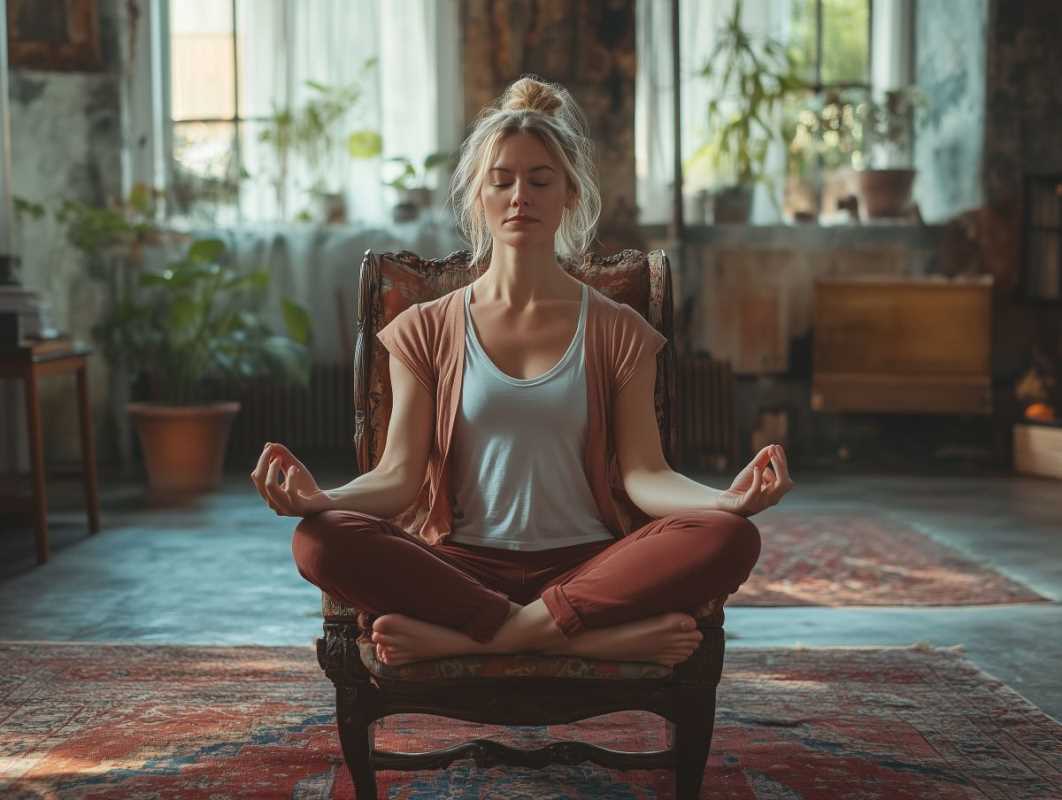
• Low Loungers: If floor seating is uncomfortable for your joints, choose an ergonomic low-profile accent chair upholstered in soft linen or bouclé.
Make this area an analog zone. Leave charging cords, tablets, and smartwatches in another room. Keeping electronics out removes the subconscious urge to check notifications.
Designing for Aware Rituals
Once the basics are in place, arrange the space to support your daily habits. If setting up your yoga mat feels like a chore, you will skip your practice.
• Keep props within reach: Store yoga blocks, straps, and foam rollers in a woven basket or a closed wooden cabinet so they stay organized and out of sight.
• Bring nature indoors: Add hardy indoor plants like snake plants or peace lilies. Research in biophilic design shows that living greenery visibly lowers blood pressure and cleans the surrounding air.
• Set up a grounding focal point: Place a small timber side table nearby to hold a single candle, a journal, or a singing bowl.
Having everything ready to go removes friction, making it easy to drop into a session whenever you have ten spare minutes.
Maintaining Your Energy and Consistency
Building your space is the easy part. Protecting it as a quiet zone takes a little practice.
If you share your home with family members or roommates, communicate your boundaries early. Let them know that when you are in that corner, you are off the clock. If you do not have a dedicated room with a door, use a folding wooden screen or a cluster of tall potted plants to create a visual divider. It is a gentle signal to everyone else, and to your own brain, that this zone is reserved for quiet decompression.
Keep the environment fresh by rotating small elements with the seasons. Swap out a light linen throw for a heavy wool blanket in winter, or change the botanical scent in your diffuser when spring arrives.
Treat your time here as a non-negotiable part of your schedule. Even five minutes of slow breathing with your morning tea will reset your mind for the day ahead.
Sources:
1. NKBA 2025 Kitchen Trends Report
https://kbbonline.com/trends-inspirations/nkba-2025-kitchen-trends-report/158865/
2. Scandinavian Designs Home Wellness Guide
https://scandinaviandesigns.com/blogs/the-scandinavian-style-edit/thome-wellness
3. Mosaic Design Build Wellness Spa-Inspired Interiors
https://mosaicdesignbuild.com/wellness-spa-inspired-interiors-how-to-create-a-home-sanctuary-in-2025/
*This article on WellnessChecker is for informational and educational purposes only. Readers are encouraged to consult qualified professionals and verify details with official sources before making decisions. This content does not constitute professional advice.*