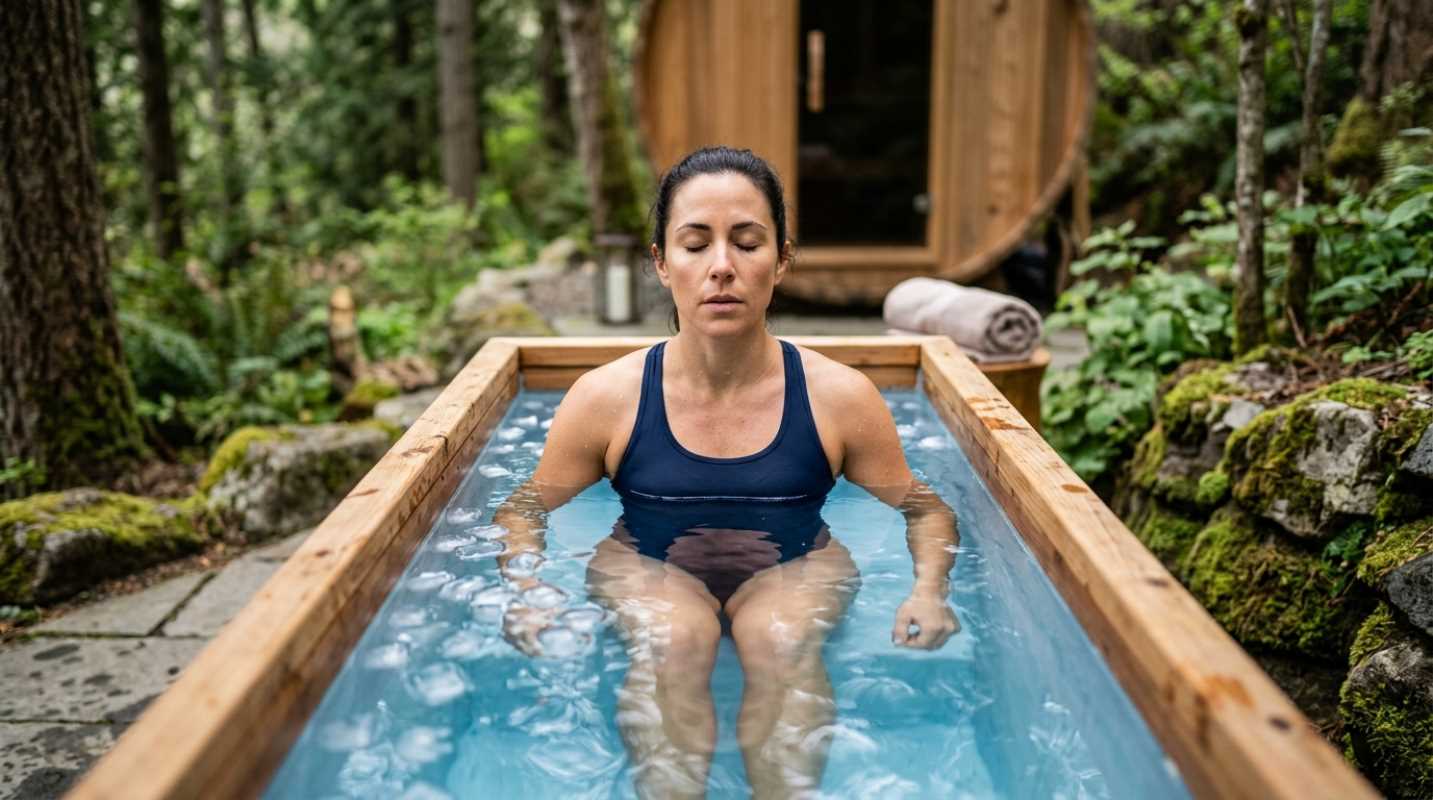
Walk into any gym, spa, or backyard wellness setup today, and you are bound to see someone shivering inside a tub of freezing water. Cold plunge therapy is everywhere. It is on your social media feeds, talked about on your favorite health podcasts, and practiced by everyone from elite athletes to your next-door neighbor. But is this just another passing wellness trend, or is there real science behind the freeze?
Let's separate the hype from the actual physiological reality. Cold water immersion is not just a quick test of mental grit. It is a highly controlled physical practice that triggers a massive, systemic response inside your body. When you understand what happens beneath the surface, you can use the cold as a powerful tool for your health.
What Happens to Your Body in the Cold
The moment your skin hits that icy water, your body goes into survival mode. This is known as the cold shock response. Your heart rate spikes, your breathing quickens, and your sympathetic nervous system instantly takes the wheel. It is a primal, built-in alarm system designed to keep you alive.
To protect your vital organs, your body immediately constricts your blood vessels. This process, called vasoconstriction, pulls blood away from your extremities and rushes it toward your core. Think of it as a natural defense mechanism that keeps your internal engine warm. Once you step out of the tub, your blood vessels dilate, sending a fresh, oxygen-rich wave of blood back to your limbs.
Even when this happens, your brain gets a massive chemical wake-up call. The cold triggers a rush of norepinephrine, a neurotransmitter that sharpens your focus and boosts your alertness. This is why you feel so incredibly awake and alive the second you get out of the water.
Recovery Inflammation, and Beyond
If you have ever seen an athlete jump into an ice bath after a brutal workout, you already know the reputation of the cold plunge. But what does the latest clinical research actually say?
A complete meta-analysis published in February 2026 evaluated 30 randomized controlled trials on how cold water immersion affects muscle damage. The study confirmed that cold plunging significantly reduces delayed onset muscle soreness (DOMS) and lowers creatine kinase levels, which is a key marker of muscle damage. Interestingly, the peak benefits for soreness and recovery are concentrated right at the 24-hour mark.
But there is a catch. If your goal is to build muscle mass, you might want to hold off on the ice. The same 2026 research shows that cold therapy right after lifting blunts muscle growth. Because the cold suppresses the natural inflammatory response needed for muscle repair, sports medicine physicians recommend waiting at least four to six hours after resistance training before you plunge.⁴
We also have to talk about how different bodies react to the cold. A 2025 Swiss study looked closely at how women recover using cold water. Surprisingly, the researchers found that cold water immersion did not accelerate recovery from muscle damage in the female participants. This is a big deal because most historical recovery data was done on men. It means your specific biology plays a massive role, and a one-size-fits-all protocol might not work.
Beyond muscle recovery, the cold does wonders for your metabolism. It activates brown adipose tissue, or brown fat. Unlike white fat, which stores energy, brown fat acts like an internal furnace, burning glucose and lipids to generate heat. In fact, research shows that consistent cold exposure can improve insulin sensitivity by up to 40% to 43%.⁵
Although brown fat activation is great, too much of a good thing can backfire. A study from February 2025 looked at young adults doing 10-minute cold plunges every single day. Instead of getting healthier, their bodies treated the daily freezing shock as a constant stressor, which actually decreased their insulin sensitivity temporarily. The takeaway here is simple: your body needs time to adapt and recover. Daily, intense plunging without rest might do more harm than good.
We cannot ignore what the cold does for your immune system either. A 2025 systematic review highlighted a large-scale trial showing that people who added just 30 to 90 seconds of cold water to their daily showers saw a 29% reduction in sickness absence from work.¹ Although a single plunge won't make you bulletproof overnight, consistent exposure helps build long-term immune resilience. There is even emerging research suggesting that the cold triggers autophagy, which is your body's way of clearing out damaged, old cells to make room for healthier ones. Think of it as a cellular spring cleaning.
Mental Resilience and the Neurochemical Edge
Let's be honest: voluntarily stepping into a tub of 50-degree water is a psychological battle. Have you been there, standing on the edge, debating your life choices? That mental resistance is actually part of the therapy.
When you force yourself to stay calm in the cold, you are training your brain to handle stress. A landmark 2025 meta-analysis published in PLoS One analyzed 11 studies with over 3,000 participants.¹ The researchers found a significant reduction in stress levels exactly 12 hours after cold water immersion.¹ This suggests that regular cold exposure trains your parasympathetic nervous system to regulate stress over a longer horizon.
Then there is the legendary post-plunge high. Cold exposure triggers a massive release of dopamine and norepinephrine. Research shows that immersion in 57-degree water can trigger a 530% increase in norepinephrine and a 250% to 500% spike in dopamine.³ This is not a quick, cheap high that leaves you crashing an hour later. It is a slow, sustained release that keeps your mood lifted and your mind clear for hours.
If you are ready to bring this practice into your daily routine, you will want the right equipment to make it consistent and safe. Here are some of the best tools and setups to help you get started.
Best Practices for Safe and Effective Cold Water Immersion
Before you go dumping bags of ice into your bathtub, let's talk about how to do this safely. You do not need to freeze yourself to get the benefits.
For beginners, consistency is much more important than intensity. Start with a temperature sweet spot between 10°C and 15°C (50°F to 59°F). Going any colder than that dramatically increases your cardiovascular stress without actually giving you more metabolic or mental benefits.
To design a safe, science-backed routine, keep these guidelines in mind
• The weekly dose: Aim for 11 minutes of total cold exposure per week, split into two to four sessions of two to three minutes each.²
• The recovery window: Keep your plunge at least four to six hours away from your strength training sessions if you are trying to build muscle.⁴
• Listen to your body: Never plunge alone, and always get medical clearance first if you have a history of heart conditions, blood pressure issues, or Raynaud's syndrome.
Integrating the Chill into Your Lifestyle
At the end of the day, cold plunge therapy is not a magic cure-all, but it is an incredibly effective tool when used correctly. The real magic happens when you turn it into a sustainable, long-term habit.
You do not need to start with a ten-minute ice bath. Start small, listen to your body, and focus on the mental victory of simply getting in. Whether you are looking to bounce back faster from tough workouts, sharpen your mental focus, or build a more resilient mind, the cold has something to offer. It is about biohacking your biology to live a healthier, more active life.
Sources:
1. PLoS One Meta-Analysis on Stress
https://journals.plos.org/plosone/article?id=10.1371/journal.pone.0317615
2. Cold Plunge Benefits and Weekly Protocols
https://theralpine.com/blog/cold-plunge-benefits-science
3. Human Physiological Responses to Cold Water Immersion
https://pubmed.ncbi.nlm.nih.gov/41716304/
4. Cold Plunge and Ice Bath Health Benefits
https://topdoctormagazine.com/news/cold-plunge-ice-bath-health-benefits-doctors/
5. Cold Exposure and Metabolic Health
https://www.levels.com/blog/does-cold-exposure-improve-metabolic-health
*This article on WellnessChecker is for informational and educational purposes only. Readers are encouraged to consult qualified professionals and verify details with official sources before making decisions. This content does not constitute professional advice.*