Have you ever crawled into bed exhausted, closed your eyes, and then spent the next two hours staring at the ceiling? It's a frustrating routine that millions of people face every night. You might blame stress or that late afternoon cup of coffee, but the real culprit could be sitting right in front of you: your bedroom environment.
We often view our bedrooms as catch-all spaces. They become home offices, laundry sorting stations, and entertainment centers. But your brain pays close attention to environmental cues. When your sleeping space feels chaotic, bright, or overly stimulating, your nervous system stays on high alert.
Transforming your bedroom into a dedicated sanctuary isn't a frivolous decor project. It's one of the most effective ways to improve your daily sleep quality. By making intentional choices about light, sound, layout, and temperature, you can signal to your body that it's finally safe to wind down and rest.
Mastering the Aesthetic with Calming Colors and Textures
The visual elements in your room do far more than just look pretty. Colors actually reflect specific light wavelengths that affect your nervous system and heart rate. High-contrast or bright neon colors stimulate mental activity, making it harder for your brain to relax at the end of the day.
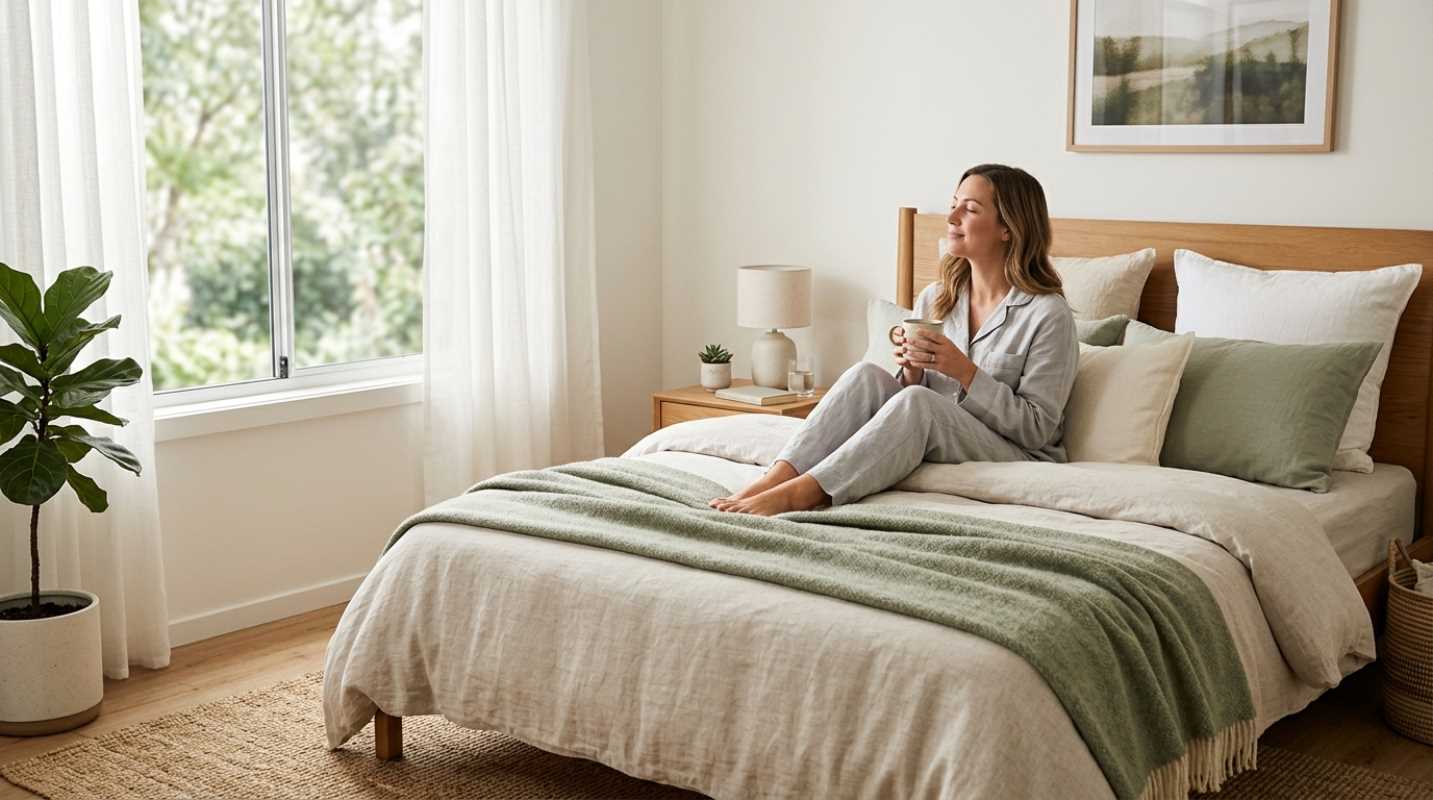
If you want a space that promotes rest, muted and low-arousal shades are your best friends. Recent consumer surveys show that 38% of people reported noticeable sleep improvements simply by repainting their walls to a calmer hue.¹ Studies tracking sleep duration found that individuals sleeping in blue rooms enjoyed the longest rest each night, averaging nearly eight hours.
To create a serene visual space, consider these color choices
• Muted blues and slates: Blue tones naturally prompt your brain to lower heart rate and reduce stress hormones.
• Sage and eucalyptus greens: Soft greens sit right in the center of the visible light spectrum, easing eye muscle strain and creating a sense of natural comfort.
• Warm earth neutrals: Taupe, soft gray, and warm off-white lower visual contrast, keeping cognitive stimulation to a minimum.
You should steer clear of active reds, high-energy yellows, and deep purples. Saturated red wavelengths, like, trigger physiological arousal, which is the exact opposite of what you need before bed.
Texture plays an equally key role in physical comfort. Introducing soft, tactile elements helps soothe your sensory system. Layer your bed with breathable natural fabrics like cotton or linen. Adding a plush rug underfoot gives your feet a soft landing in the morning, while an upholstered headboard dampens echo and adds visual softness.
Eliminating External Stressors Like Light and Noise
Your eyes contain specialized sensor cells that monitor light levels and communicate directly with your brain's internal clock. When these cells detect light, they immediately slow down melatonin production. Even tiny amounts of ambient light during the night can disrupt deep sleep, increase heart rate, and disturb your metabolic balance.
To give your body the dark environment it needs, lower light levels to under 10 lux in the hour before bed, and aim for near total darkness while you sleep. Here are a few practical ways to lock out unwanted light
• Hang blackout drapery: Dense curtains keep out intrusive streetlights and headlights.
• Switch to warm light bulbs: Use bedside lamps with warm bulbs rated at 2700 Kelvin or lower, which won't suppress natural melatonin.
• Cover small indicator lights: Place tiny electrical tape squares over glowing LEDs on air purifiers, TVs, and power strips.
Sound control is just as important. Your auditory cortex stays active while you sleep, scanning for potential threats. Sudden noises disrupt sleep continuity, shattering deep sleep cycles even if you don't fully wake up.
The World Health Organization recommends keeping indoor bedroom sound levels under 30 decibels for quality rest.² Sudden sound spikes reaching 45 decibels or higher can spike your cortisol and disrupt sleep architecture. In fact, acoustic research shows that sleeping in a properly sound-isolated space can boost your deep slow-wave sleep by 16 to 34 minutes each night.³
To manage unwanted ambient sounds, consider adding heavy textiles to absorb echo, using door draft stoppers to block hallway noise, or running a sound machine. Continuous pink or brown noise provides a steady acoustic blanket that masks unpredictable outdoor disruptions.
Optimizing Bedroom Design Elements for Better Sleep
Once you've managed light and sound, it's time to focus on physical comfort and climate control. Your body needs to drop its core temperature by one to two degrees Celsius to initiate sleep. If your room is too hot, your body works overtime trying to cool itself down, leading to restless tossing and turning.
Set your bedroom thermostat between 60°F and 67°F (15.5°C to 19.4°C) for ideal night conditions. Combine this cooler temperature with moisture-wicking bedding to prevent overheating during deep sleep stages.
Indoor air quality matters just as much as room temperature. High levels of carbon dioxide from poor ventilation lead to frequent nighttime awakenings and morning grogginess. Keep indoor carbon dioxide levels below 1,000 parts per million by simply leaving your bedroom door slightly open overnight or using an air purifier to keep fresh air moving.
Room layout also exerts a subtle psychological force. Place your bed in a clear command position where you can easily see the entrance door without being directly in line with it. This setup taps into a subconscious sense of security. Paired with a tidy space free from stacks of paper or laundry, it lowers evening anxiety and clears mental friction.
Establishing a Tech-Free Sleep Sanctuary
It's tempting to scroll through social media or stream a show right before sleep, but electronic devices are sleep destroyers. Screens emit concentrated blue light that deceives your brain into thinking it's midday. Beyond the light issue, checking work emails or watching news feeds keeps your mind engaged and anxious.
Building clear physical boundaries around technology is needed for long-term sleep health. Try these simple analog habit shifts
• Charge phones in another room: Keep smartphones and tablets out of arm's reach so you aren't tempted to check notifications.
• Use a standard alarm clock: Replace your phone alarm with a standalone clock so your phone isn't the first thing you touch in the morning.
• Shift to relaxing analog habits: Spend the final 30 minutes of your evening reading a physical book, journaling, or doing gentle stretching.
Your Path to Consistent Rest
Creating a truly restful bedroom isn't something you need to accomplish all at once. Small, deliberate adjustments build momentum over time.
Start tonight with just one quick change. You might lower your thermostat a few degrees, move your phone charger into the hallway, or put a strip of dark tape over a glowing LED light. Every small reduction in light, sound, and visual clutter brings your brain one step closer to deep, uninterrupted sleep. Your physical and mental health are worth the effort.
Sources:
1. Forbes
https://www.forbes.com/sites/nomanazish/2022/09/27/the-best-and-worst-bedroom-colors-for-sleep-according-to-experts/
2. World Health Organization
https://www.who.int/europe/news-room/fact-sheets/item/noise
3. National Institutes of Health
https://pmc.ncbi.nlm.nih.gov/articles/PMC8929548/
*This article on wellnesschecker is for informational and educational purposes only. Readers are encouraged to consult qualified professionals and verify details with official sources before making decisions. This content does not constitute professional advice.*